Culture needs a back room
Articulating what I have been repeating for many years...
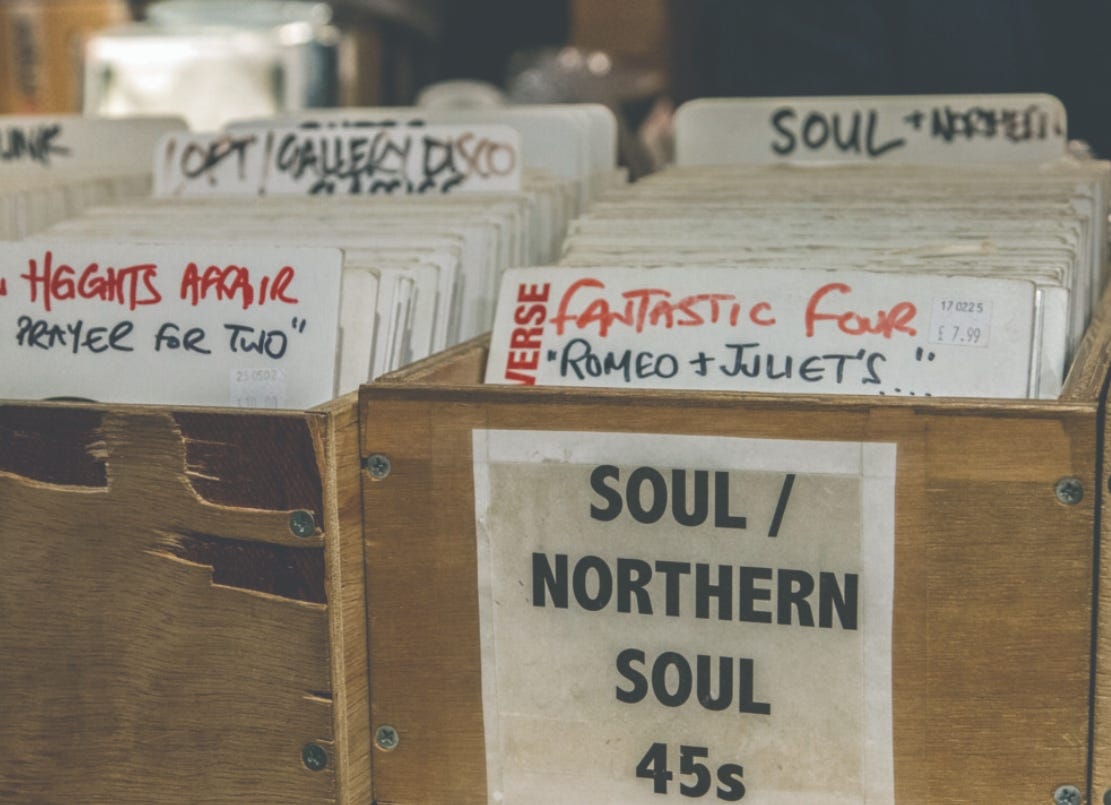
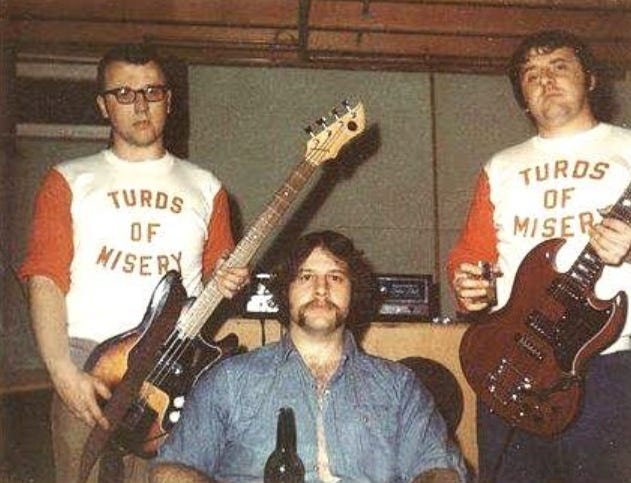
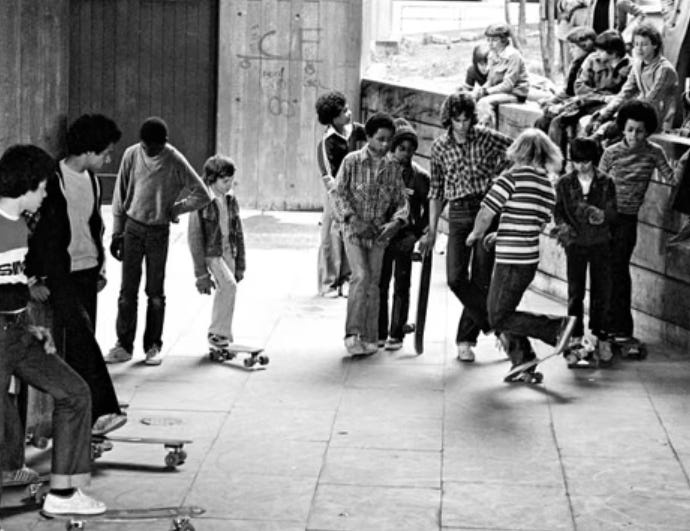
Culture used to start in rooms. A record shop, a club night, a corner of a market, a mate’s garage with a pile of magazines and a sewing machine. Small groups of people with a shared obsession, left alone long enough to build something. Garage, punk, indie, hip hop, rave. Every one of them came out of a small pocket of space and a longer pocket of time than anyone gets now. Nobody outside cared, and that was the protection.
I’ve spent 35 years in fashion watching this happen up close. The scenes that changed what people wore never arrived from a head office. They came out of a few back streets in Tokyo, a handful of shops and studios in Hong Kong, a club in Manchester or New York. They took years to form, and they were built by people who argued with each other. By the time the wider world noticed, the ideas were fully formed, with a point of view strong enough to survive the trip around the globe. And when they travelled, they mutated. Punk in London was not punk in New York. That mutation was the point.
That process is gone. Anything with a spark of newness gets picked up by an algorithm within days, pushed into a global feed, copied and watered down, then sold back to everyone as content. The scene never gets its incubation period. The people who would have spent years in a back room working out what the thing actually was get thirty seconds of virality instead, and then it’s over. What comes out the other end is flat. The music is flat. The fashion is flat. Everything is sanded down to fit the middle of the taste curve, because the middle of the taste curve is where the ad money sits.
The platforms didn’t do this out of malice (!?). It’s simply what happens when a handful of companies own global attention and their business model rewards sameness. Reach became instant, so nothing stays small. And nothing that skips being small ever gets to be interesting.
Here’s the part most people miss, and it’s the reason VIA exists. The magic of those old scenes was never really the geography. Geography was a filter. If you were standing next to me in a record shop flipping through the same crates, we had already found each other through a hundred small shared decisions before we ever spoke. The postcode did the matching. What mattered was that the matching was accurate and the group stayed small.
Agents can do that matching without the postcode.
A brand’s agent that genuinely knows the brand, its taste, its references, its music, its obsessions, can find the consumer, the collector, the designer or the other brand on the opposite side of the world with the same sensibility. Not the same category. Category matching is what got us here: streetwear brand meets streetwear buyer, everyone drowning in more of the same. Taste matching is different. The denim maker, the record collector and the ceramicist who all orbit the same aesthetic without knowing the others exist. Scenes were always built like that, across disciplines, by people who recognised something in each other before they could name it.
Then the agents get out of the way. Their job ends at the introduction, with enough context that the first conversation isn’t cold. Everything after that stays human. The argument, the to and fro, the awkward first attempt at working together. That friction is the point. It’s where the culture gets made. The moment software starts drafting the collaboration and polishing the pitch, you’ve rebuilt the flattening machine with better plumbing.
So the model is straightforward. Everyone on the network, brand or individual, has an agent that knows them properly. The agents talk to each other constantly, across an open and decentralised network rather than inside anyone’s walled garden, looking for genuine matches of intent and sensibility. When they find one, they introduce the humans. The humans do what humans in scenes have always done: talk, disagree, make things, co-create, co-market, take it somewhere nobody planned.
It won’t recreate 1963, 1976 or 1991, and it shouldn’t try. What it can do is give small groups of like-minded people the two things the current internet took away: the ability to find each other accurately, and the room to build something together before the world gets hold of it.
Commerce follows culture. It always has. The last fifteen years tried to run it the other way round, and the result is the blandness everyone can feel but nobody can quite name. We’re building the infrastructure to put it back in the right order.